Scalp Ink and MRI Scans | What to Know Before Your Scan and What to Tell Your Medical Team

Scalp ink (scalp micropigmentation, or SMP) is drawing attention from people concerned about thinning hair, a widening part, a visible crown, or a receding hairline. The treatment uses tiny dots to create shading (light and dark tones) on the scalp, helping make see-through areas less noticeable.
However, many people considering scalp ink share one major concern: “Will scalp ink stop me from having an MRI in the future?” Some people hesitate to take the first step after hearing rumors such as “a hair tattoo can cause burns during an MRI” or “you may be refused a scan.”
In this article, a Borderless Salon writer explains the relationship between scalp ink and MRI scans, whether there is any effect, how risks can arise, and practical steps for having a scan safely. Whether you can have a scan is ultimately decided by the medical facility performing it. Learn the facts so you can feel more at ease while enjoying healthy, glossy hair and the hairstyle you want.
Contents
- 1. What Is Scalp Ink? The Basics and Why It Is Popular
- 2. Why Do People Say You Can’t Have an MRI with Scalp Ink?
- 3. Can You Have an MRI If You Have Scalp Ink?
- 4. Ink (Pigment) Ingredients and Safety: What Affects MRI Scans
- 5. Five Essential Steps When Having an MRI After Scalp Ink
- 6. Pros and Cons of Scalp Ink, and Who It May Suit
- 7. Before/After: Scalp Ink Cases at Borderless Salon
- 8. How to Choose a Scalp Ink Salon or Clinic You Won’t Regret
- 9. FAQ: Scalp Ink and MRI Scans
- 10. Why Clients Choose Borderless Salon
- 11. Summary: Accurate Information and Telling Your Medical Team in Advance Matter Most
1. What Is Scalp Ink? The Basics and Why It Is Popular

How Scalp Ink (SMP) Works
Scalp ink is a technique generally known as scalp micropigmentation (SMP) or a “hair tattoo.” Using a dedicated ultra-fine needle, special ink (pigment) is placed in the epidermis — a very shallow layer of skin, about 0.15–0.25 mm deep — and tiny dots are layered to create shading (light and dark tones) on the scalp.
What sets this technique apart is that, unlike hair transplants, which relocate hair, or hair growth treatments, which aim to grow hair, it takes the approach of “creating shading on the scalp so that bare skin shows less.” Because it can reduce how much bare scalp shows (pale or reddish areas) and adds natural-looking shading, it has become a popular option for people who want visible results for thinning hair.
How It Differs from Conventional Hair Tattoos
Scalp ink differs in several important ways from conventional cosmetic tattooing for brows or eyeliner and from ordinary body tattoos.
| Item | Scalp ink (SMP) | Cosmetic tattooing (brows, etc.) | Ordinary body tattoo |
|---|---|---|---|
| Depth | Upper epidermis (approx. 0.15–0.25 mm) | Epidermis to upper dermis (approx. 0.2–0.5 mm) | Deep dermis (approx. 1.0–2.0 mm) |
| Needle | Single ultra-fine needle | Three-prong or multi-needle groupings, or blades | Thick multi-needle groupings |
| Ink | Made for the scalp (designed to resist blurring and color change) | Made for the face (e.g., skin-friendly brown tones) | Made for the body (multi-color inks that may contain heavy metals) |
| Duration | About 2–5 years (fades gradually) | About 1–3 years (fades gradually) | Semi-permanent (does not fade away) |
A tattoo places ink deep in the dermis, so it stays semi-permanently. Scalp ink, on the other hand, is applied to the epidermis, where skin turnover takes place, so it gradually fades over time. This can be an advantage, as the design can be adjusted later to suit changes in your hairstyle or an increase in gray hair as you age.
Why Men and Women with Thinning Hair, Hair Loss, or Scars Choose It
Scalp ink is supported by many people because it can address a wide range of concerns. It is one option for people with concerns like these:
- Progressing AGA (male pattern hair loss): Helps cover a crown where the scalp shows through or a receding hairline. When applied to a shaved head, it can create a look close to a stylish buzz cut.
- Diffuse thinning in women and a widening part: Adding dots to concerns common among women — overall loss of volume, a sharply visible part, or a widening crown — can make hair look denser and help create a more youthful impression.
- Alopecia areata: Adding ink to patches of sudden hair loss can help camouflage them, either temporarily or for the longer term.
- Donor scars after a hair transplant (back of the head): Can help make linear scars from hair harvested at the back of the head, or dot-shaped scars from the FUE method, less noticeable.
- Scars from head injuries or surgery: Can help naturally conceal areas where hair no longer grows because follicles were damaged by a past accident or surgery such as a craniotomy.
2. Why Do People Say You Can’t Have an MRI with Scalp Ink?
How MRI Works and the Effect of Its Strong Magnetic Field
To understand the “MRI issue” with scalp ink, it helps to first know how an MRI scan works.
MRI (magnetic resonance imaging) uses a very powerful magnet (static magnetic field) and radio waves (radiofrequency pulses) that interact with water (hydrogen atoms) in the body to create cross-sectional images. A typical MRI scanner has a field strength of 1.5 to 3.0 tesla — tens of thousands of times stronger than the Earth’s magnetic field.
When metal is brought into this strong magnetic field, it can be pulled toward the magnet, heat up, or distort the images. That is why metal items such as smartphones, watches, keys, and hairpins are strictly prohibited in the MRI room.
Problems Caused by Metal Components (Iron Oxide) in Ink
So why is scalp ink a concern for MRI scans? The reason lies in the coloring ingredients in the ink (pigment).
When making dark inks such as black, brown, or gray, a mineral (metal component) called “iron oxide” has traditionally been widely used to achieve stable color. Because iron oxide is magnetic, it can react to the strong magnetic field of an MRI scanner. This is the underlying reason scalp ink is a concern for MRI scans.
Two Main Risks: Heat (Burns) and Image Distortion (Artifacts)
When metal components in ink are exposed to an MRI’s magnetic field, the following two risks may arise.
① Risk of heating and burns from electromagnetic induction
During an MRI scan, the machine repeatedly emits radiofrequency (RF) pulses. When metal components such as iron oxide receive these pulses, a weak electric current (eddy current) can flow through the metal particles by the principle of electromagnetic induction. This current can turn into heat, and the skin where the ink was placed may warm up quickly.
In the worst case, heat can build up within the skin, with a risk of a mild to moderate “burn”. This is the issue medical facilities watch for most closely.
② Image distortion from a disturbed magnetic field (artifacts)
Metal particles can disturb the uniform magnetic field created by the MRI scanner. As a result, parts of the image may appear as black gaps or be distorted, making accurate diagnosis difficult. This is known in technical terms as an “artifact”.
In head MRI scans in particular, metal components in scalp ink could distort images of important areas of the brain, creating a risk that small lesions such as a stroke or a brain tumor may be missed.
3. Can You Have an MRI If You Have Scalp Ink?
Why Telling Your Medical Team in Advance Is Essential
Here is the short answer:“Having scalp ink does not automatically mean you cannot have an MRI. The final decision is made by the medical facility performing the scan.”
In the past, some hospitals reportedly turned away anyone with a hair tattoo. Today, many facilities consider each case individually, taking into account the area to be scanned and the equipment used, and may proceed with appropriate precautions and your consent.
However, for this to happen, telling them in advance yourself is absolutely essential.Always tick “yes” in the tattoo section of the medical questionnaire and tell the doctor or radiographer directly. If you have a scan without mentioning it and a burn occurs, the facility may not be able to respond as quickly, and you may also be held responsible.
Cases Where the Decision Depends on the Facility or Body Area
Whether a scan can go ahead is ultimately decided by the doctor and medical facility in charge of the scan. Policies differ depending on the hospital, the area being scanned, and the field strength of the MRI scanner used.
- MRI scans of areas other than the head (lower back, knees, abdomen, etc.): Because the area being scanned is away from the inked scalp, the effect of image distortion (artifacts) is considered small. The risk of heating is also thought to be lower than when the head itself is scanned, and these scans are often allowed to go ahead.
- Head MRI scans (brain screening, detailed head examinations, etc.): Because the inked area itself is being scanned, a careful decision is required. Especially when using an ultra-high-field MRI scanner of 3.0 tesla or more, the risk of heating and image distortion increases, so some hospitals may ask you to sign a consent form in advance or may switch to a scanner of 1.5 tesla or less.
Reported Problems, Including Burns, and Their Background
There have been reports of skin discomfort, redness, or minor burns during MRI scans in people with tattoos, but circumstances vary depending on the ink’s ingredients and the scan conditions.
Looking at such cases, the following factors have been pointed out.
- Very old or low-cost ink: Tattoo inks from decades ago, and low-cost tattoo inks that did not meet regulatory standards, sometimes contained large amounts of iron oxide or heavy metals.
- Large, dense tattoos: Unlike tiny dots on the scalp, large solid tattoos covering the whole back or arm contain more metal overall and heat up more easily.
- Scans without advance notice: Cases where the patient did not mention the tattoo, so staff could not monitor closely and the scan continued even after discomfort began.
Checking the ink’s ingredients and taking basic steps — such as telling staff in advance and responding promptly during the scan — helps reduce the risk of a serious burn. However, the risk cannot be ruled out entirely, so please follow the medical facility’s decision on whether to proceed.
📍 Borderless Salon
Feel free to book with us
4. Ink (Pigment) Ingredients and Safety: What Affects MRI Scans
Iron Oxide Content and Risk
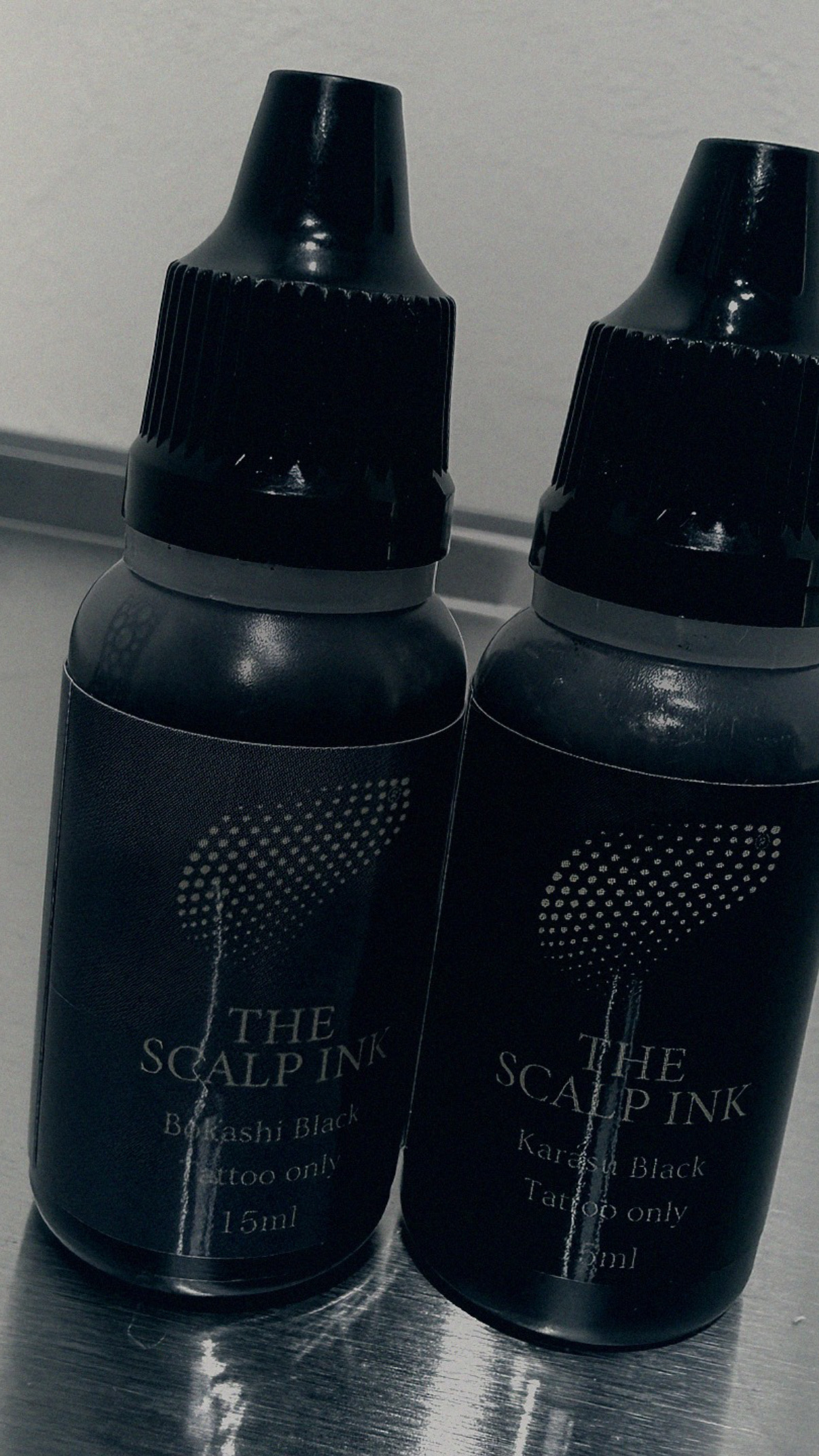
When it comes to scalp ink and MRI, the most important factor is the ink’s ingredients. The lower the proportion of iron oxide in the ink — or if it is made with non-magnetic alternatives — the lower the risk during an MRI scan is considered to be.
Some recently developed pigments made for scalp ink are designed with MRI scans in mind. They keep metal components (iron oxide) to a minimum or are based on non-magnetic pigments such as carbon black, which is thought to lower the likelihood of heating in a magnetic field.
Points to Check About Ink Ingredients and Safety
To judge an ink’s safety, it is important to get an explanation of its ingredients and metal content from the manufacturer or the salon performing the treatment.
- Ingredients: Check what ingredients the ink contains and how much metal (such as iron oxide) it includes.
- Manufacturer: Check whether you can see the manufacturer’s name and documents such as a safety data sheet (SDS).
Ink Safety and Our Commitment at Borderless Salon
At Borderless Salon, your health and safety come first, and we choose our scalp ink (pigment) with great care.
5. Five Essential Steps When Having an MRI After Scalp Ink
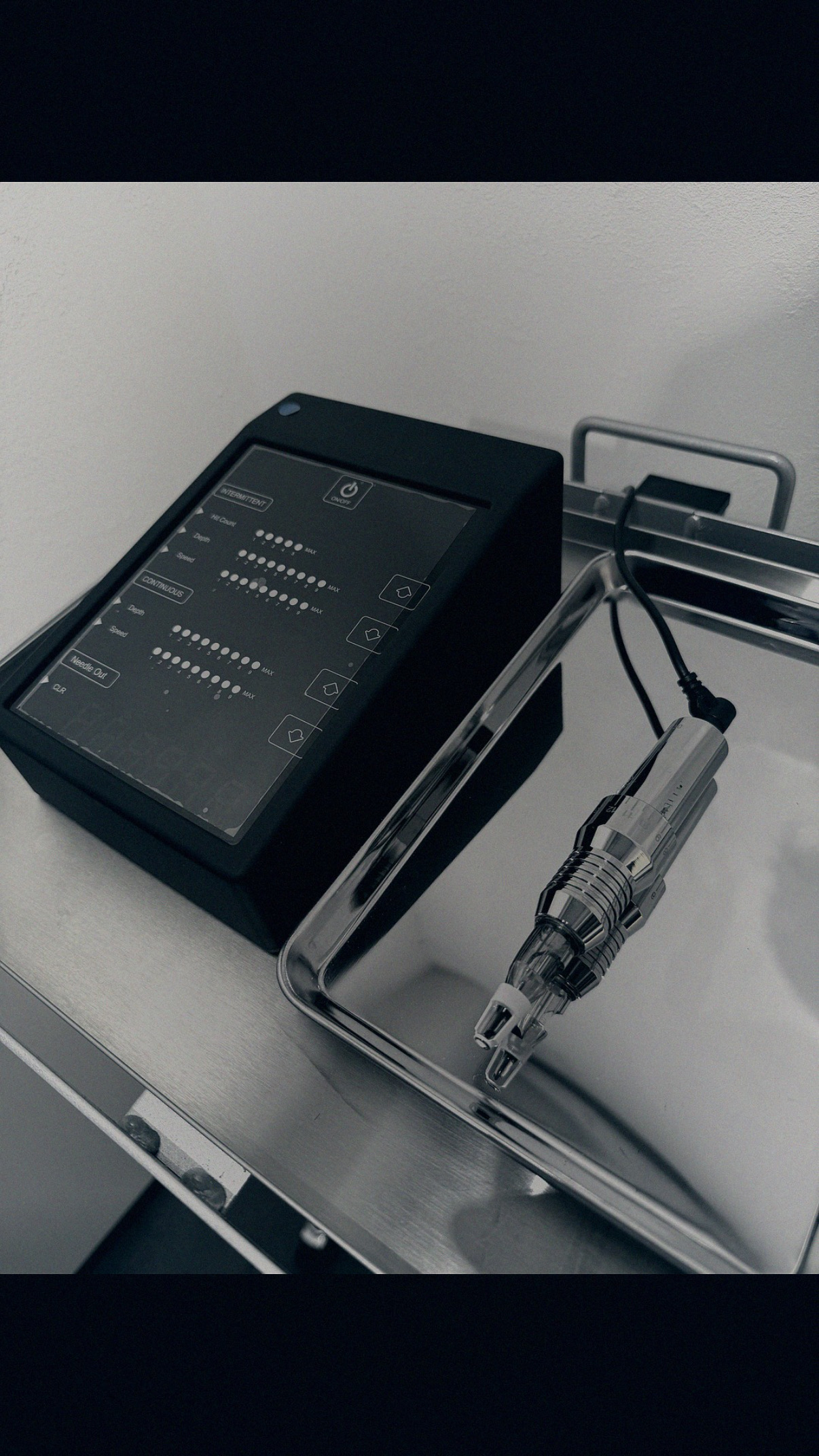
If you need an MRI after scalp ink treatment — for a health check or a detailed examination — be sure to take the following five steps. Each one helps prevent problems.
① Always tell the doctor or radiographer in advance
The most important step, and one you should never skip, is telling them in advance. At reception, when filling in the questionnaire, and during the radiographer’s final check just before entering the scan room, always say clearly, “I have scalp ink (SMP) on my scalp.” This allows the medical team to take appropriate precautions, such as monitoring you closely during the scan, placing a cool towel on your head if needed, and making sure you have the emergency call button.
② Fill in the consent form and understand the risks
Some medical facilities ask patients with hair tattoos to sign a consent form confirming they understand the small risks of an MRI scan, such as heating or image distortion. This is a procedure to help prevent medical incidents, so there is no need to be overly worried. Read it carefully and sign once you are comfortable with it.
③ Speak up right away if you feel discomfort (heat or tingling)
Once the MRI scan begins, the machine makes loud knocking and banging sounds as the radio waves start. If at any point during the scan your scalp feels “hot,” “tingling or painful,” or “gradually warming up,” don’t put up with it — squeeze the call bulb (buzzer) in your hand right away to alert the radiographer. Pausing the scan and cooling the head can help prevent problems such as burns.
④ Ask the salon or clinic that did your treatment about the ink’s ingredients
Once your MRI is scheduled, we recommend contacting the salon that performed your scalp ink (such as Borderless Salon) in advance to check the ink manufacturer’s name and whether the ink is suitable for MRI (meets safety standards). If the doctor asks, “Do you know the ink’s ingredients or metal content?”, being able to share specific information you confirmed with the salon makes it easier for the medical facility to decide.
⑤ Understand the effect on MRI scans of other body areas
As mentioned above, for MRI scans of the knees, lower back, legs, or abdomen, the effect on the scalp is considered small. Rather than avoiding a scan out of excessive worry, please prioritize the medical care you need. Even then, it is good practice — and a safer approach — to mention that you have a tattoo on your scalp.
6. Pros and Cons of Scalp Ink, and Who It May Suit

Now that we’ve covered the MRI concern, let’s look at the overall pros and cons of this technique and who it may suit.
Pros: Visible results, long-lasting, easy upkeep, and a natural look
- Visible results: Hair growth products, oral medication, and hair transplants can take months or years to show results. With scalp ink, see-through areas can become less noticeable from the day of treatment (within a few days, once any redness settles).
- Long-lasting and cost-effective: Once settled, results typically last about 2–5 years, though this varies by person. It can reduce the effort and cost of daily hair-thickening sprays or fibers, and the stress of worrying about color running in rain or sweat.
- Easy upkeep: Unlike wigs or hairpieces, there are no regular salon visits for maintenance, replacements, or daily fitting. You can shampoo as usual.
- Natural finish: Borderless Salon’s experienced stylists create shading with fine dots, so it looks natural at an everyday distance. Results vary from person to person.
Cons: Hard to remove, changes over time, and advance notice for MRI scans
- Not easy to remove: Although it fades over time, removing it completely requires treatments such as laser removal, which take time and money. That is why careful design planning from the start is very important.
- Gray hair: If your hair turns completely gray in the future, dots made with black or gray ink may stand out. Adjusting the ink tone with the future in mind, or coloring gray hair regularly, may be needed.
- Telling medical staff before MRI scans: As explained in this article, you will need to mention your scalp tattoo every time you have an MRI scan for the rest of your life.
Who Scalp Ink May Suit
- People who cannot use hair loss medications (such as finasteride or minoxidil) due to concerns about side effects, or who did not see results
- People hesitant about a hair transplant due to cost, downtime, or fear of surgery, or who want to conceal donor scars after a transplant
- Women whose crown or part is thin and whose scalp shows through even after styling
- Men with progressing AGA who would rather switch to a stylish shaved look with a sharp hairline
- People who want to naturally cover areas where hair does not grow due to alopecia areata or injury scars
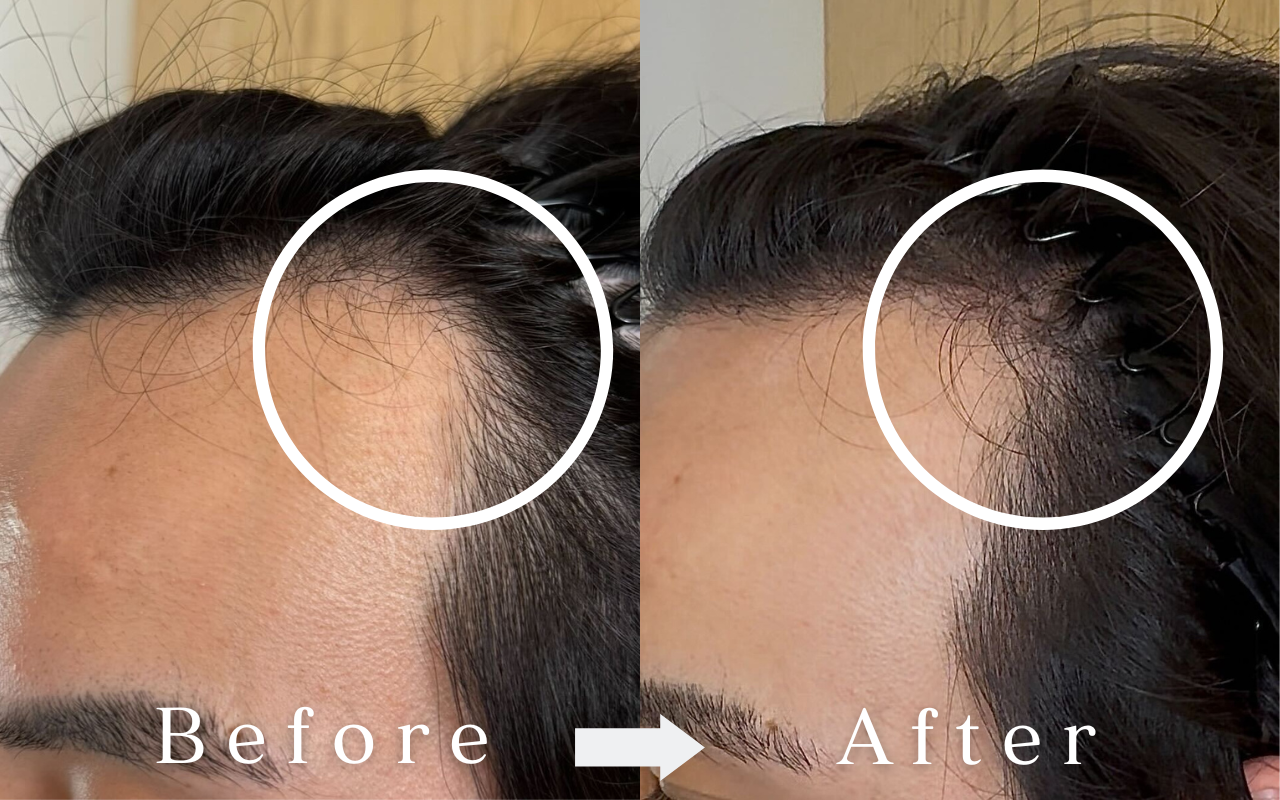
7. Before/After: Scalp Ink Cases at Borderless Salon
Here are some scalp ink cases performed at Borderless Salon. See the detailed work of our internationally experienced stylists, who take into account the shape of the scalp, hair flow, and personal coloring.
Case 1: Covering thinning at the top and crown (male)
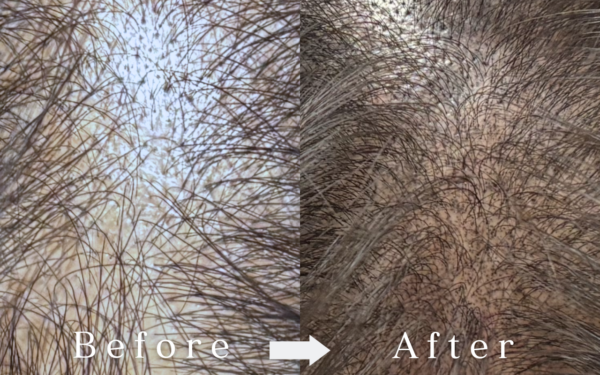
This client was concerned that the scalp showing from the top of the head to the crown made him look older than his age. We adjusted the size and density of the dots step by step to blend with the density of his surrounding hair. After treatment, the pale scalp was much less visible, blending naturally with his own hair, and he was very pleased with the result.
Case 2: Covering the scalp at the hairline and front (male)
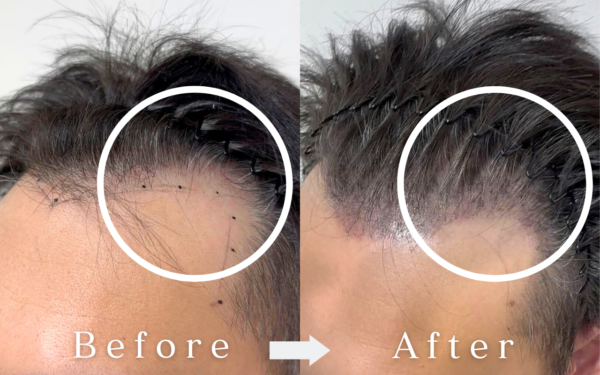
This client was concerned about a receding M-shaped hairline and frontline. Rather than creating an unnaturally straight line, we layered fine dots irregularly to add natural shading to the skin around the hairline. The scalp around his forehead became less noticeable, and he told us he was happy to have more hairstyle options.
Case 3: Reducing the visibility of a woman’s part and volume loss
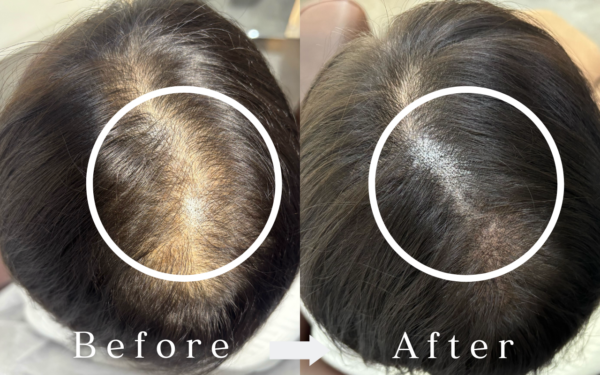
This woman’s part had become wider and more clearly visible due to aging and hormonal changes. For women, we use even finer dots and carefully choose an ink color that blends with the skin so that it looks natural even when the hair is parted. The white line of the part becomes less noticeable, giving the impression of more volume and shine throughout the hair.
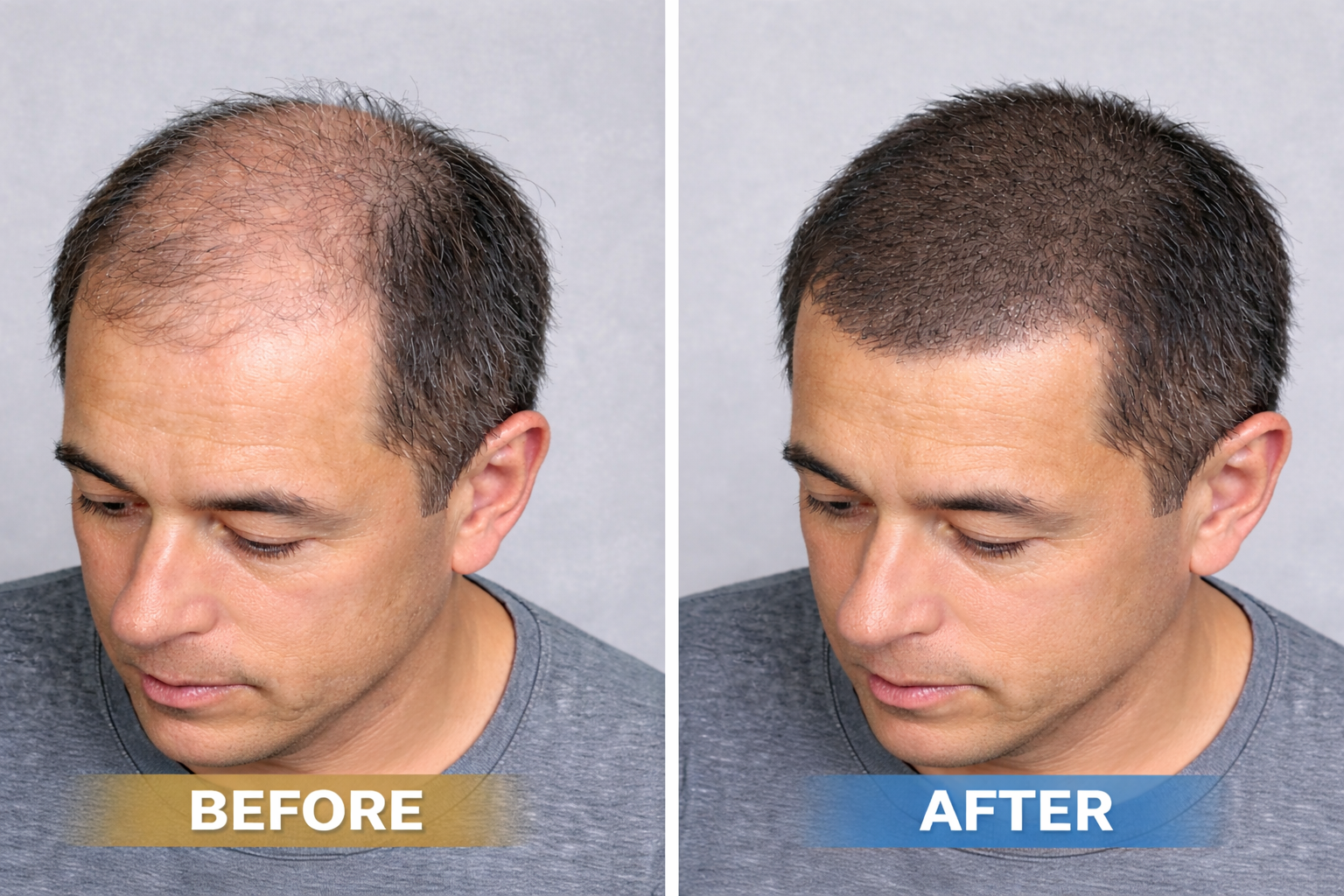
Case 4: High-density SMP for overall thinning (male)
This client had diffuse thinning across his whole head, making styling difficult. Over several sessions, dots were placed evenly and densely across the entire head. His own hair and the scalp ink blended well, giving a healthy, strong impression, like a short hairstyle freshly cut at a salon.
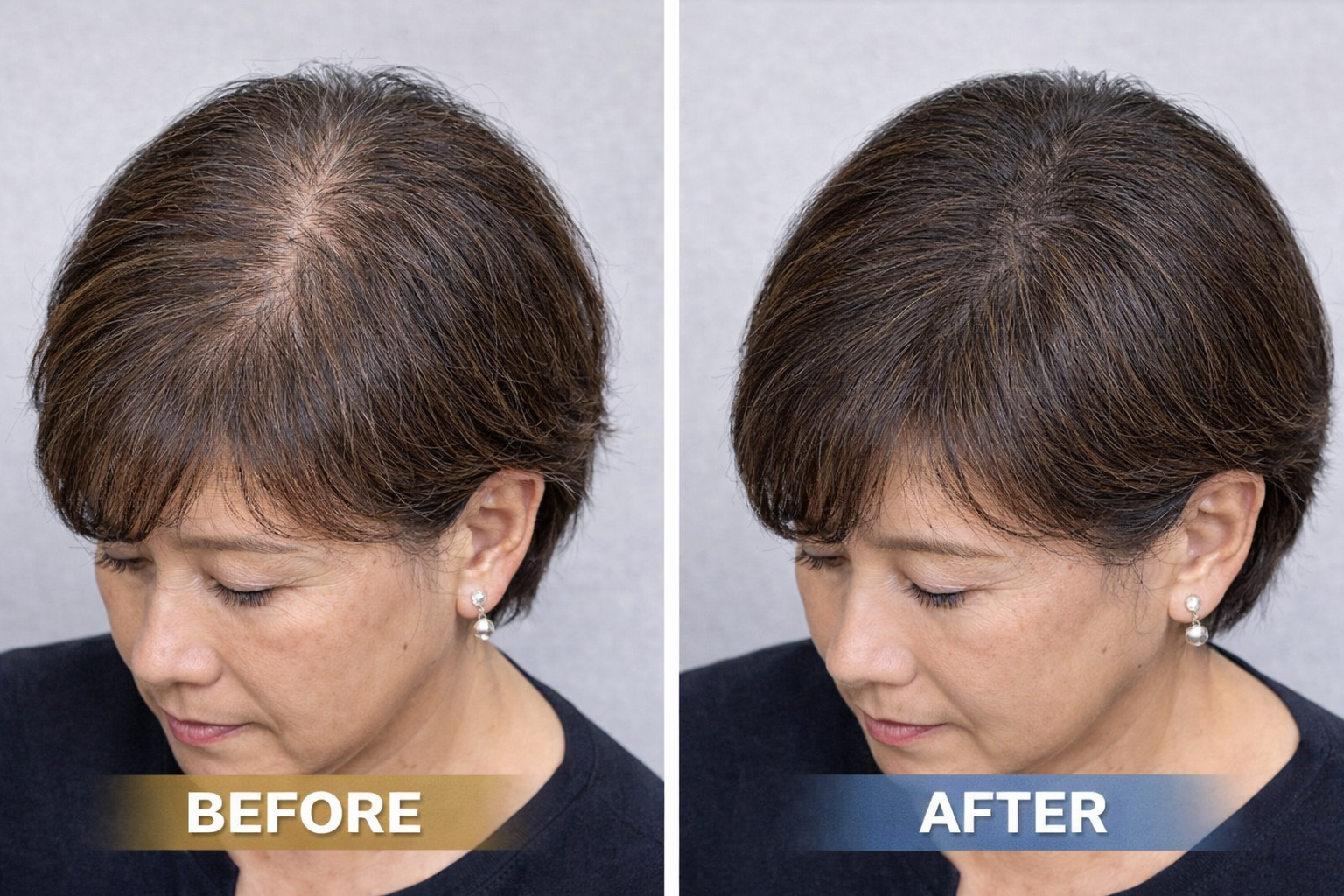
Case 5: Concealing the scalp at the crown and back of the head (female)
This client found it distressing when the scalp around her crown showed in a mirror or when someone stood behind her. Using an ash dark brown ink matched to her surrounding hair color, dots were placed precisely along the swirl of her crown. The contrast of the scalp was softened without creating an unnatural dark patch.
📍 Borderless Salon
Feel free to book with us
8. How to Choose a Scalp Ink Salon or Clinic You Won’t Regret
Scalp ink stays on the scalp for several years once applied, so it is an important decision. To consider MRI safety and be happy with the design, choosing a trustworthy salon or clinic is important. Use the following three criteria to choose carefully.
Does the salon disclose the ink’s ingredients and safety standards?
To reduce the impact on MRI scans — the core topic of this article — the quality of the ink used is the most important factor. Choose a salon that clearly provides information such as the following during consultation or on its website.
- Can they explain the ink manufacturer’s name, ingredients, and metal content?
- Is it a pigment that excludes or minimizes iron oxide (metal components)?
- Can they provide an ingredient list or safety data sheet (SDS) for the ink?
Avoid salons that only promote low prices or give vague answers about the ink’s ingredients, as this may increase future medical risks.
The practitioner’s skill, track record, and careful consultation
Scalp ink requires very delicate skill. If the needle depth is too shallow, the ink can fade quickly; if it is too deep (reaching the dermis), the ink can blur and look like a bluish-black stain. Check the practitioner’s track record (a wide range of case photos), and at the consultation, check the following points.
- Do they assess your individual scalp condition (firmness, dryness, oiliness, etc.) when planning the treatment?
- Do they offer long-term design suggestions with future gray hair and hairstyle changes in mind?
- Do they honestly explain not only the benefits but also MRI risks, downtime, and aftercare?
Hygiene and aftercare
Because the treatment involves needles, strict hygiene comparable to a medical facility is required. Needles must be fully disposable, and the treatment area and tools must be thoroughly disinfected. Also check whether there is post-treatment follow-up, support in case of skin problems, and touch-up options (such as fine adjustments to the finish).
9. FAQ: Scalp Ink and MRI Scans
Here are answers to questions we are often asked about scalp ink and MRI scans.
Q1. How long after scalp ink should I wait before having an MRI?
A1. Right after treatment, the scalp has tiny wounds (needle marks) and mild inflammation. Exposing it to an MRI’s magnetic field and radio waves at this stage could cause unexpected irritation or problems, so we strongly recommend waiting at least one month after treatment, until the scalp has fully healed (and the ink has settled), before having a scan.
Q2. What should I do if I feel heat during an MRI scan?
A2. Don’t hesitate to squeeze the emergency call buzzer (rubber bulb) you are given before the scan starts. When the buzzer sounds, the radiographer will pause the scan and check on you via the microphone. Appropriate measures such as cooling the head can help prevent a burn. Please never try to put up with it.
Q3. Is there a difference in MRI effect between medical hair tattoos and salon scalp ink?
A3. Whether the treatment is done at a medical facility or a beauty salon does not in itself determine the effect on MRI scans. What matters is the ink’s ingredients (metal content). Even at a medical facility, low-cost ink with high metal content can increase risk, and even at a salon like Borderless Salon, the risk varies depending on the ink’s ingredients and metal content. Checking the safety standards of the ink before treatment is the most important step.
Q4. Can I get an ingredient list or certificate for the scalp ink?
A4. Yes. At Borderless Salon, we can share information about the safety and main ingredients of the ink we use (such as the manufacturer’s name and ingredients), so you can show it to your doctor if you have an MRI in the future. Please ask your stylist or our front desk staff.
Q5. I have regular cancer screenings or brain check-ups. Is it okay to have the treatment?
A5. Even if you plan to have regular brain check-ups or head MRI scans, it is important to tell the medical facility in advance. Whether you can have a scan is ultimately decided by the medical facility. If you are concerned, we recommend asking your doctor or the facility where you plan to have your check-up beforehand: “I’m planning to have scalp ink (SMP) soon — will it affect future examinations?”
Q6. Does scalp ink affect CT scans or X-rays as well?
A6. CT scans (X-ray computed tomography), standard X-rays, and PET scans use X-rays or other forms of radiation rather than a magnetic field. For this reason, it is considered unlikely that small amounts of metal in scalp ink would heat up or distort images. Still, to be safe, it is a good idea to tell the medical facility that you have scalp ink.
10. Why Clients Choose Borderless Salon
Borderless Salon is a premium hair salon specializing in beautiful, glossy hair, hair quality treatments, and straightening, with four salons in Omotesando and Azabujuban — two of Tokyo’s trend-setting areas. Beyond bringing out the beauty of your hair itself, we take a total approach to the beauty of your hair and scalp, from scalp care to concerns about how your scalp looks, with scalp ink.
One-on-one treatment by internationally experienced stylists, with a strong sense of design
Borderless Salon has many skilled stylists who trained in global hair capitals such as New York, London, Paris, and Sydney, refining their techniques and international sensibility. For scalp ink, too, we don’t simply darken the scalp: we carefully assess each client’s head shape, hairline flow, the thickness and color of their own hair, and their skin’s personal coloring. With our one-on-one dedicated stylist system, a single stylist takes care of you from consultation to treatment and aftercare. Every design is tailored to you.
The synergy of hair quality care and hair tattoos
We are a hair salon known for hair quality treatments, highlights, and blonde colors. This lets us approach both the inked scalp and the hair growing on top of it, so that both look their best. While scalp ink camouflages see-through areas, combining it with our original HydraFacial scalp cleansing and hair quality treatments helps keep the scalp healthy and adds shine, body, and bounce to the hair you have. This synergy of scalp care and hair design is a strength unique to Borderless Salon.
Four Salons in Omotesando and Azabujuban: Access and Atmosphere
All Borderless Salon locations are conveniently located near stations.
- Omotesando / Omotesando ANNEX: An area where refined trends and quality culture meet. A private space where you can escape the bustle of the city.
- Azabujuban / Azabujuban Patio St: A luxurious, refined salon set in a calm, grown-up neighborhood. Private rooms are available, so you can relax during your treatment without worrying about being seen.
English is available at all of our salons, and we are trusted by clients from diverse backgrounds in Japan and abroad.
Aftercare After Your Treatment
How well the ink settles can vary depending on skin type (oily, dry, etc.). If you would like a little more density or fine adjustments to the line after treatment, please talk to us. We also continue to support you after treatment, including advice about future MRI scans and daily scalp care.
11. Summary: Accurate Information and Telling Your Medical Team in Advance Matter Most
Some people worry that scalp ink will mean they can never have an MRI again, but whether you can have a scan is ultimately decided by the medical facility performing it. It is important to check the ink used with your salon and to tell the medical facility clearly in advance when you have a scan.
Concerns about thinning hair or a visible part can take away your everyday confidence and make it harder to enjoy styling your hair. For some people, scalp ink eases these concerns, and looking in the mirror each day becomes something to enjoy.
At Borderless Salon, our highly skilled stylists put your safety first and aim for a natural, beautiful finish. No question is too small — “Can I have scalp ink with my hair condition?” or “I want to know more about MRI scans.” Start with a free consultation at Borderless Salon. Let us help you find healthy, glossy hair and a new, more confident you.
📍 Borderless Salon – PREMIUM HAIR & SCALP
Addressing your hair and scalp concerns, toward the hair you want
Our internationally experienced stylists work with you one-on-one on your concerns. English is available at all of our salons, and we offer scalp ink treatments.